Pages

Tuesday, May 15, 2012

Balliet on Bean


© -  Steven A. Cerra, copyright protected; all rights reserved.
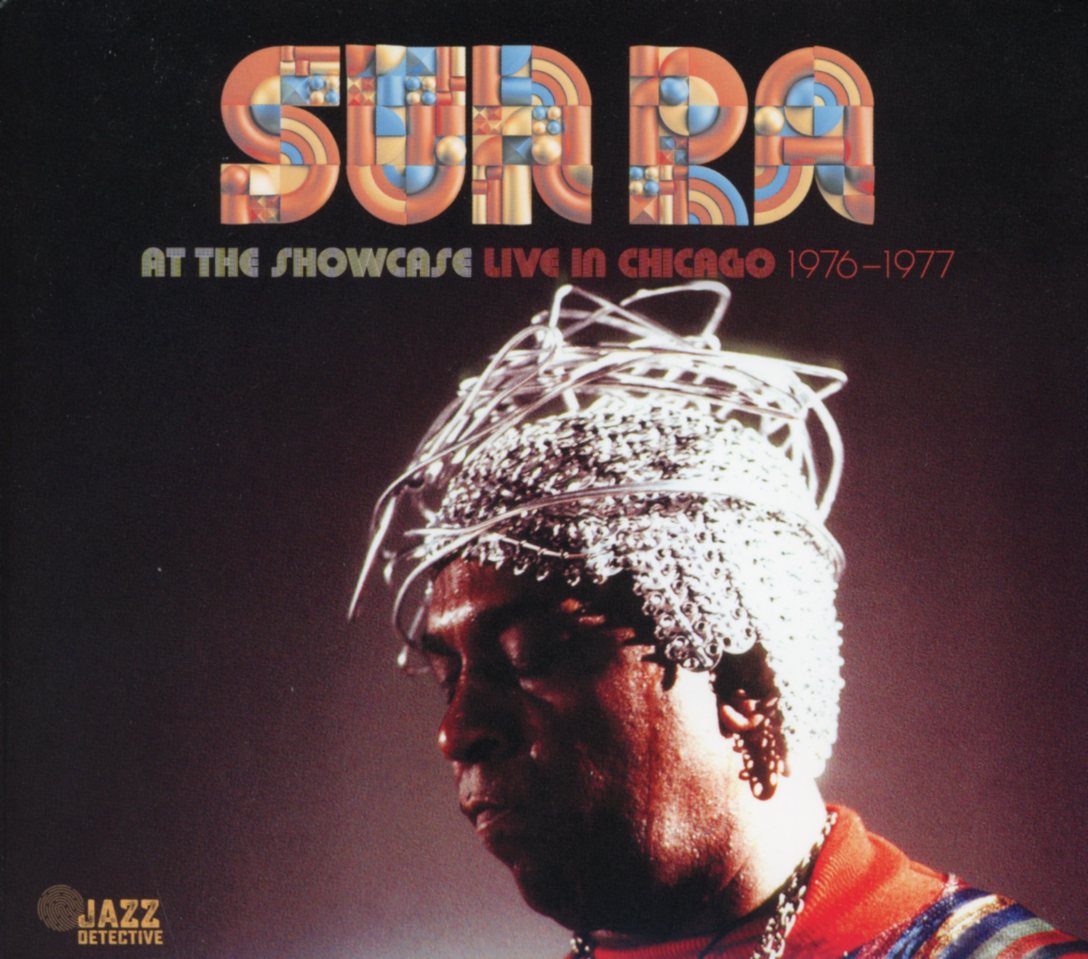

The editorial staff at JazzProfiles has long wanted to have a piece on the site in honor of the memory of Coleman Hawkins, the man most responsible for bringing Jazz to the tenor saxophone.  And what better way to do this for the man who was affectionately known to his peers as “Bean,” than with more of the writing of Whitney Balliett, this time from his anthology entitled Dinosaurs in the Morning: 41 Pieces on Jazz [Philiadelphia: J.B. Lippincott, 1962].

At the conclusion of Mr. Balliett’s essay, you will find a video tribute to Coleman Hawkins made with the assistance of the ace graphics team at CerraJazz LTD. The audio track is Frank Foster’s “Juggin’ Around” on which Frank is joined on tenor saxophone by Gene Ammons and Frank Wess, along with Nat Adderley on cornet, Bennie Green on trombone and a rhythm section of Tommy Flanagan, Ed Jones and Albert “Tootie” Heath on piano, bass and drums, respectively. All three tenor saxophonists were heavily influenced by Bean.

© -  Whitney Balliet, copyright protected; all rights reserved.

“IMPROVISATION, the seat of jazz, is a remorseless art that demands of the performer no less than this: that, night after night, he spontaneously invent original music by balancing‑with the speed of light ‑emotion and intelligence, form and content, and tone and attack, all of which must both charge and entertain the spirit of the listener. Improvisation comes in various shapes. There is the melodic em­bellishment of Louis Armstrong and Vic Dickenson; the similar but more complex thematic improvisation of Lester Young; the improvisation upon chords, as practiced by Coleman Hawkins and Charlie Parker, and the rhythmic-thematic convolutions now being put forward by Thelonious Monk and Sonny Rollins. There are, too, the collective improvisations, such as, the defunct New Orleans ensemble, and its contrapuntal descendants, which are thriving in the bands of John Lewis and Charlie Mingus. Great improvisation occurs once in a blue moon; bad improvisation, which is really not improvisation at all but a rerun or imitation of old ideas, happens all the time. No art is more precarious or domineering. Indeed, there is evidence that the gifted jazz musicians who have either died or dried up early are primarily victims not of drugs and alcohol but of the insatiable furnace of improvisation. Thus, such consummate veteran improvisers as Armstrong, Dickenson, Hawkins, Buck Clayton, and Monk are, in addition to being master craftsmen, remarkable endurance runners. One of the hardiest of these is Hawkins, who, now fifty-four, continues to play with all the vitality and authority that be demonstrated during the Harding administration as a member of Mamie Smith's jazz Hounds.

Hawkins, in fact, is a kind of super jazz musician, for he has been a bold originator, a masterly improviser, a shepherd of new movements, and a steadily developing performer. A trim, contained man, whose rare smiles have the effect of a lamp suddenly going on within, he was the first to prove that jazz could be played on the saxophone, which bad been largely a purveyor of treacle. He did this with such conviction and imagination that by the early thirties he had founded one of the two great schools of saxophone playing. In 1939, Hawkins set down, as an afterthought at a recording session, a version of "Body and Soul" that achieves the impossible - perfect art. A few years later, he repeated this success with "Sweet Lorraine" and "The Man I Love." Unlike many other jazz musicians, who are apt to regard anything new with defensive animosity, Hawkins has always kept an ear to the ground for originality, and as a result he led the first official bebop recording session, which involved Dizzy Gillespie, Max Roach, and the late Clyde Hart. Soon afterward, he used the largely unknown Thelonious Monk in some important recordings. Then his playing inexplicably began to falter and he went into semi-eclipse, from which he rocketed up, without warning, in the early fifties, landing on his feet with a brand-new style (his third), whose occasional febrility suggests a man several decades younger.

Hawkins's early style was rough and aggressive. His tone tended to be harsh and bamboo-like, and he used a great many staccato, slap-tongued notes. But these mannerisms eventually vanished, and by the mid-thirties he had entered his second and most famous phase. His heavy vibrato suggested the wing beats of a big bird and his tone halls hung with dark velvet and lit by huge fires. His technique had become infallible. He never fluffed a note, his tone never shrank or overflowed-as did Chu Berry's, say-and he gave the impression that he had enough equipment to state in half a dozen different and finished ways what was in his head. This proved to be remarkable, particularly in his handling of slow ballads.

Hawkins would often begin such a number by playing one chorus of the melody, as if he were testing it. He would stuff its fabric with tone to see how much it would take, eliminate certain notes, sustain others, slur still others, and add new ones. Then, satisfied, he would shut his eyes, as if blinded by what he was about to play, and launch into impro­visation with a concentration that pinned one down. (Hawkins's total lack of tentativeness ‑ the exhilarating, blind man tentativeness of Pee Wee Russell or Roy Eldridge ‑ suggested that he had written out and memorized his solos long before playing them.) He would construct‑out of phrases crowded with single notes, glissandos, abrupt stops, and his corrugated vibrato‑long, hilly figures that sometimes lasted until his breath gave out. Refilling his lungs with wind‑tunnel ferocity, he would be off again‑bending notes, dropping in little runs like steep, crooked staircases, adding decorative, almost calligraphic flourishes, emphasizing an occasional phrase by allowing it to escape into puffs of breath. He often closed these solos with roomy codas, into which he would squeeze fresh and frequently fancy ideas that bad simply been crowded out of his ear­lier ruminations. If another soloist followed him, he might terminate his own statement with an abrupt ascending figure that neatly catapulted his successor. When Hawkins had finished, his solo, anchored directly and emphatically to the beat, had been worked into an elaborate version of the origi­nal melody, as though be had fitted a Victorian mansion over a modern ranch house. At fast tem­pos, Hawkins merely forced the same amount of music into a smaller space. There seemed to be no pause between phrases or choruses, and this pro­duced an intensity that thickened the beat and whose vehemence was occasionally indicated by sus­tained growls. Yet for all this enthusiasm, Hawkins' playing during this period often left the listener vaguely dissatisfied. Perhaps it was because his style had an unceasing - and, for that time, unusual - intellectual quality, with the glint of perfection and a viselike unwillingness to let any emotion out, lest it spoil the finish on his work. One kept waiting for the passion beneath the surface to burst through, but it never did-until five years ago.

Hawkins can now be volcanic. His present style is marked primarily by a slight tightening of tone, which sometimes resembles the sound he achieved at the outset of his career; the use of certain harsh notes and phrases that, not surprisingly, suggest Charlie Parker and Sonny Rollins; and an almost dismaying display of emotion. This exuberance has been costly. In his pursuit of pure flame, Hawkins sometimes misses notes or plays them badly, and he falls back, perhaps out of fatigue, on stock phrases of his own, such as a series of abrupt, descending triplets. When everything is in mesh, however, the results are formidable. …”


Click on the "X" to close out of the advertisements should they appear while you are viewing the video.


Saturday, May 12, 2012

Jeff Hamilton: Always in Good Time and in Good Taste


© -  Steven A. Cerra, copyright protected; all rights reserved.


If you have an interest in Jazz drumming, Jeff Hamilton spoils you.

He doesn’t follow a standard of excellence for good taste and drive in the drum chair; Jeff sets the standard. Jeff always comes to play and his playing is always superb.

Nothing is thrown in or thrown away. With Jeff, every bar of music counts and every bar he plays is musical.

One of the qualities that I admired in the work of Larry Bunker, the late drummer, vibraphonist and pianist, was that whatever the musical setting, Larry made a difference.

When Larry replaced Chico Hamilton with Gerry Mulligan and Chet Baker, the quartet became more hard-driving and forceful. He was trumpeter and composer Shorty Rogers drummer of choice in either a big band or a small group setting. “He makes things happen in the music,” said Shorty. When pianist Bill Evans was in Hollywood and looking for a replacement for drummer Paul Motian, the unanimous recommendation from the studio pros was Larry.  Bill later said of his year-and-a-half tenure with Larry: “His time was always so strong and his drumming so discriminating.” And when, Claire Fischer formed his big band, he said of Larry: “There was no other choice to fill the drum chair.  Larry is not just a drummer, he is a complete musician.”

Jeff Hamilton is this kind of drummer. You never overlook him. Not because he draws attention to himself, but because of the attention he draws to the music at hand by his contributions to it.

Woody Herman once said: “Davy Tough, Don Lamond and Jake Hanna all made my band their own, and so did Jeff Hamilton. That’s pretty damned good company.”

You can run but you can’t hide as the drummer is a piano, bass and drums trio.

Many drummers overplay in such an intimate setting, but not Jeff who always brings the perfect blend of time-keeping, adding color and, when called upon, masterful solo interpretations to trios led by pianist Monty Alexander, bassist Ray Brown and his own group with Tamir Hendelman on piano and Christoph Luty on bass.

Drummers like Jeff make you proud to be associated with the instrument and we wanted to recognize and salute him on these pages with the following overview of his career as drawn from his website: www.hamiltonjazz.com/ and with the video tribute that concludes this piece.

“Originality is what versatile drummer Jeff Hamilton brings to the groups he performs with and is one of the reasons why he is constantly in demand, whether he is recording or performing with his trio, Oscar Peterson, Ray Brown, the Clayton Brothers or co-leading the Clayton/Hamilton Jazz Orchestra. As well as recording and performing throughout the world, Jeff also teaches, arranges and composes.

Jeff has received rave reviews for his dynamic drumming. David Badham of Jazz Journal International stated in his review of the Clayton/Hamilton Jazz Orchestra's release, Heart and Soul (Capri): "This is one of the finest modern big band issues I've heard...This is undoubtedly due to Jeff Hamilton, a most driving and technically accomplished drummer."" Jeff is equally at home in smaller formats. He is an integral part of the Clayton Brothers and Herb Wong stated in his review of their release, The Music (Capri), in JazzTimes: "Always evident is...the colorful work of the rhythm section featuring...the sensitivity and sizzle of Jeff Hamilton's seasoned drums." Leonard Feather of the Los Angeles Times described Jeff and his work with Oscar Peterson as "the Los Angeles-based drummer whose intelligent backing and spirited solo work met Peterson's customarily high standards..." In his review of he Ray Brown Trio in the Denver Post, Jeff Bradley stated that Jeff "brought the crowd to its feet with his amazing hand-drumming, soft and understated yet as riveting and rewarding as any drum solo you've heard."

Born in Richmond, Indiana, Jeff grew up listening to his parent's big band records and at the age of eight began playing drums along with Oscar Peterson records. He attended Indiana University and later studied with John von Ohlen. Jeff was influenced by Gene Krupa, Buddy Rich, Mel Lewis, "Philly" Joe Jones and Shelly Manne. In 1974, he got his first big break playing with the New Tommy Dorsey Orchestra. He then joined Lionel Hampton's Band until 1975 when he, along with bassist John Clayton, became members of the Monty Alexander Trio. He attained a childhood goal in 1977 when he joined Woody Herman and the Thundering Herd, with whom he made several recordings. In 1978, he was offered the position vacated by Shelly Manne in the L.A.4 with Ray Brown, Bud Shank and Laurindo Almeida. He recorded six records with the L.A.4, some of which featured his own arrangements and compositions. From 1983 to 1987, Jeff performed with Ella Fitzgerald, the Count Basie Orchestra, Rosemary Clooney and Monty Alexander. Jeff began his association with the Ray Brown Trio in 1988 and left in March 1995 to concentrate on his own trio. From 1999-2001, the Clayton/Hamilton Jazz Orchestra was named the in-residence ensemble for the Hollywood Bowl Jazz series. Jeff is currently touring with his own Trio, the Clayton-Hamilton Jazz Orchestra and Diana Krall.

In addition to his many recordings with Ray Brown, Jeff has been on nearly 200 recordings with artists such as Natalie Cole, Diana Krall, Milt Jackson, Rosemary Clooney, Barbara Streisand, Mel Torme, John Pizzarelli, Benny Carter, Lalo Schifrin, George Shearing, Dr. John, Clark Terry, Gene Harris, Toshiko Akioshi, Scott Hamilton, Harry "Sweets" Edison, Keely Smith, Bill Holman, Herb Ellis, Barney Kessel and Mark Murphy. Jeff is a frequent guest of the WDR Big Band in Cologne, Germany. He also appeared in Natalie Cole's Great Performances PBS special, Unforgettable and an Oscar Peterson documentary, Life In The Key Of Oscar.”

Friday, May 11, 2012

Erroll Garner - The Piano As Orchestra

When we prepared our earlier book review of Timme Rosenkrantz's Harlem Jazz Adventures we came across the following information about how Erroll's career in Jazz almost didn't happen. I wonder how many other talented players got discouraged and were never "discovered" in the world of Jazz during it's heyday?


We decided to "re-discover" the wonder that was Erroll Garner by reposting our earlier piece about him on the left columnar sidebar while displaying below these excerpts from Timme's book as well as an earlier video tribute to Erroll.


- “Young Garner's father was a singer who played several instruments, as did his older brother, Linton. Erroll was an entirely self-taught musician who hit the keys when he was three years old and never did learn how to read mu­sic. But he played like no other pianist, and his flamboyant style was a delight to the ears. He would start a ballad with a long, discordant introduction that didn't even hint at the melody to come. At last when he swung into it, his left hand lay down chords like a guitar, keeping up a steady pulse, while his right hand never seemed to catch up, improvising chords or playing octaves that lagged way behind the beat for the rest of the number. Just a pinch of Fats Waller added spice.

I was fascinated by this fellow's joyously swinging piano, and I sought him out while Louis Prima was on [Garner was the intermission pianist at the Tondelayo Club on 52nd St. in NYC where Prima was the featured act]. Erroll was anything but happy. He didn't know many people in New York and was downhearted. No one was inter­ested in listening to him—Louis Prima was the showman attraction. And Erroll was only making forty dollars a week!

He told me he thought he'd go home soon, as it seemed nothing was going to happen for him in New York. Somehow, I had to stop him. I invited him home to 7 West 46th Street, showed him my rented Krakaur grand, and once he got started, it was impossible to pry him off the bench. Little did I know at the outset that he had a bad case of asthma and couldn't sleep lying down!” [p. 176]


Just click on the "X" when the ads appear on the video to close out of them.


Wednesday, May 9, 2012

To Lester from Dexter With … “Cheese Cake”


© -Steven Cerra, copyright protected; all rights reserved.


I could listen to Dexter Gordon play the tenor saxophone all night.

There was a time in my life when I often did.

Dexter made a batch of LP’s for Alfred Lion’s Blue Note label in the 1960s and his playing on them was a revelation.

His solos on these recordings were exciting and explosive, his time hard-driving and impeccable and his sound was big and wide-open.

Dexter’s ideas and inventions flowed so effusively that I couldn’t keep up with them; I couldn’t absorb them.

Anything that came into his mind came out of his horn; effortlessly.

Cascade after cascade of the hippest phrases simply flowed and flowed and flowed.

Coleman Hawkins, Lester Young, Sonny Rollins and John Coltrane received more public notice, awards and accolades, but Dexter was right up there with all of them.

When Jazz went to Europe to live, so did Dexter, performing and hanging out in Paris and Copenhagen for most of the last two decades of his life.

By the time of his triumphant return visits to the Village Vanguard in NYC and Keystone Korner in San Francisco in the late 1970s, he had become a different player; more laid back, lyrical and laconic, but still a force to be reckoned with.

Here are a few thoughts and observation about Dexter from Garry Giddins’ marvelous five-page essay on him in Visions of Jazz: The First Century [pp.330–335]:

“The King of Quoters, Dexter Gordon, was himself eminently quotable. In a day not unlike our own, when purists issue fiats about what is or isn't valid in jazz, Gordon declared flatly, ‘jazz is an octopus’—it will assimilate anything it can use. Drawing closer to home, he spoke of his musical lineage: Coleman Hawkins "was going out farther on the chords, but Lester [Young] leaned to the pretty notes. He had a way of telling a story with everything he played/' Young's story was sure, intrepid, dar­ing, erotic, cryptic. A generation of saxophonists found itself in his music, as an earlier generation had found itself in Hawkins's rococo virtuosity. …

Gordon's appeal was to be found not only in his Promethean sound and nonstop invention, his impregnable authority combined with a steady and knowing wit, but also in a spirit born in the crucible of jam sessions. He was the most formidable of battlers, undefeated in numer­ous contests, and never more engaging than in his kindred flare-ups with the princely Wardell Gray, a perfect Lestorian foil, gently lyrical but no less swinging and sure. …

Gordon was an honest and genuinely original artist of deep and abiding humor and of tremendous personal charm. He imparted his personal characteristics to his music—size, radiance, kindness, a genius for dis­continuous logic. Consider his trademark musical quotations—snippets from other songs woven into the songs he is playing. Some, surely, were calculated. But not all and probably not many, for they are too subtle and too supple. They fold into his solos like spectral glimpses of an alternative universe in which all of Tin Pan Alley is one infinite song. That so many of the quotations seem verbally relevant I attribute to Gordon's reflexive stream-of-consciousness and prodigious memory for lyrics. I cannot imagine him planning apposite quotations.”

Bruce Lundvall and Michael Cuscuna collected all of the albums that Dexter made for Blue Note into a six compact disc, boxed set that includes some omitted tracks along with photographs by Francis Wolff and selected commentary.

It’s great to have all of this music by Dexter in a digital format and it provides a convenient means to sample the music of this Jazz giant if you are not as yet familiar with it.

In line with Gary Giddins’ characterization of Dexter as “The King of the Quoters,” Dexter composed an homage to Lester Young by making a few minor [literally] chord alterations to “Tickle Toe,” an original composition that Lester made famous while performing with Count Basie’s Orchestra.

Dexter entitled his piece “Cheese Cake” and you can listen to his performance of it on the audio track to the following video on which he is joined by Sonny Clark on piano, Butch Warren on bass and Billy Higgins on drums.

To experience the sheer joy and delight of a brilliant Jazz tenor saxophonist “at work,” you can’t do much better than Dexter’s solos on “Cheese Cake.”

Monday, May 7, 2012

Phineas Redux


© -Steven Cerra, copyright protected; all rights reserved.


After a recent listening of the Sackville compact disc For Phineas SKCD2—2041] by pianists Harold Mabern and Geoff Keezer, the editorial staff at JazzProfiles thought it might be fun to reprise its earlier feature on the late piano giant Phineas Newborn, Jr. which you’ll find in the left columnar or sidebar portion of the blog.

With the help of the crackerjack graphics team at CerraJazz LTD and the ace production staff at StudioCerra, we have also put together a video tribute to Phineas [pronounced “Fine As”] that is located at the conclusion of these insert notes by John Norris, the producer of the Sackville CD.

The tune is “For Carl,” bassist Leroy Vinnegar’s memorial to the late pianist, Carl Perkins. Phineas recorded it on The World of Piano Contemporary CD[Contemporary LP S-7600; OJCCD 175-2]:

© -John Norris, copyright protected; all rights reserved.

“FOR PHINEAS celebrates the legacy of creative artists who have left an indelible mark on the music. Nat Cole, Thad Jones, Phineas Newborn and Duke Pearson were consummate musicians but they also possessed the rarer ability of creating melodies which remain in the listener's mind.

HAROLD MABERN and GEOFF KEEZER give these tunes a unique, one time interpretation which emphasizes their qualities as well as illustrating the intuitive brilliance of the two pianists.

TWO PIANO JAZZ is a dangerous path to tread. There are few pre-ordained landmarks and success comes only to those who display a high level of empathy, a mutual understanding of how the music should flow and the imagination to instantaneously respond to each other's thought processes.

Music for two pianos was once a popular part of the European Music Hall and American Vaudeville circuits, but its aesthetics had nothing to do with the spontaneity of jazz. Just listen to Ferrante & Teicher and Albert Ammons & Pete Johnson to comprehend the difference.

The Boogie Woogie duo of Ammons & Johnson made a success of their collaboration in the 1940s, but there are duet recordings dating back to the twenties by jimmy Blythe & W.E. Burton, James P. Johnson & Fats Waller and Bennie Payne & Fats Waller. For a brief period Waller incorporated a two piano version of I Got Rhythm with Hank Duncan as part of his stage show.

Stanley Cowell's Piano Choir was considered experimental in the 1970s and required a great deal of formal organization, the same has been true for James Williams' Contemporary Piano Ensemble-The Key Players. But for the most part two piano collaborations have been infrequent, unrehearsed and often stimulating and provocative. There's space to only mention a few: Willie "The Lion" Smith & Don Ewell, Jay McShann & Ralph Sutton, Dick Hyman & Ralph Sutton, Tommy Flanagan & Hank Jones, Marian McPartland & John Lewis. The success of these partnerships is the similarity of their musical approach rather than the juxtaposition of opposites.

Harold Mabern and Geoff Keezer have a common musical vision. They have both been inspired by the breathtaking originality of Memphis pianist Phineas Newborn who, in the 1950s, came up with a dazzling fresh take on the "locked hand" concept used previously in jazz by Milt Buckner, George Shearing and Red Garland.

HAROLD MABERN, of course, was there when Newborn was in his prime and took that inspiration with him when he left for Chicago to begin a career which has included engagements with most of the music's giants. He's now a Jazz Master whose depth of vision and life experience makes him an instantly identifiable stylist.

GEOFF KEEZER came to this music by a different route. He was still in Eau Claire, Wisconsin, when he first heard Newborn via his classic Contemporary recordings. Since he arrived in New York, his career has been guided by James Williams, who himself was an alumnus of Newborn's Memphis heritage. Keezer's phenomenal pianistic vision encompasses many different horizons but he is a truly exciting "of the moment" performer who is already fully capable of sitting shoulder to shoulder with a Harold Mabern on equal terms.

No description of this music can replace the exhilaration of actually experiencing it. Fortunately, for us, the tape machine was rolling when Harold Mabern and Geoff Keezer took to the stage of Toronto's Montreal Bistro for these selections, which come from the second night of their performances together [January 25, 1995].

JOHN NORRIS - January 1996”

Harold takes the first solo beginning at 2:14 minutes and Geoff’s solo follows at 4:40 minutes.


Sunday, May 6, 2012

Stefano Bollani is "Looking for You"

Another quick visit to our Jazz in Italy series this time featuring the talented pianist, Stefano Bollani, performing In Cerca Di Te [which roughly translates as Looking for You]. Stefano plays the piece with Ares Tavolazzi on bass and drummer Walter Paoli.


As is the case with many of today's Jazz musicians, Stefano has his own website which you can locate by going here.

Chet Baker With A Song In His Heart


© -  Steven A. Cerra, copyright protected; all rights reserved.

“In 1953, upon the success of his best-selling recording of "My Funny Valentine" with the Gerry Mulligan Quartet, Chet Baker became an instant star. He began winning polls here and abroad with rhythmic regularity for five .years. His "Valentine" solo was soft and lyrical. Lyricism seemed to be Baker's stock in trade, although he was capable of playing crackling bop lines of great intricacy and inventiveness.

And he sang. He sang with.. .well, let Rex Reed describe it... "an innocent sweetness that made girls fall right out of their saddle oxfords." Before he had time to digest the fact of his sudden celebrity as a trumpet soloist, Chet found himself win­ning polls as a vocalist. In one, he was tied with Nat Cole. From obscurity to status among the jazz public as a more popular trumpet player than Louis Armstrong, Dizzy Gillespie and Miles Davis, and as a singer the equal of Nat King Cole. All in the space of slightly more than a year.”
- Doug Ramsey

Was there ever a more photogenic Jazz musician than Chet Baker?

Despite the ravages of time accelerated by an unhealthy lifestyle [or maybe because of it?], Chet seemed to maintain a welcoming presence in front of the camera.

In some cases, this may have more the result of the skills of the photographer than Chet photographable qualities.

Musically, one thing is certain, Doug Ramsey is right when he states that … “Lyricism seemed to be Baker's stock in trade.”

You can judge both his lyricism and his camera-friendly qualities for yourself by sampling the following video in which Chet sings and plays “With a Song In My Heart.” [Click on the “X” to close-out the ads when they appear on the video].

Saturday, May 5, 2012

Herbie Hancock - "A Jump Ahead"


A Jump Ahead does not have a conventional melody or theme.

Instead, the tune gets its structure from a four-bar ostinato played by bassist Paul Chambers.

An ostinato is a short melody pattern that is constantly repeated in the same part at the same pitch.

Nat Hentoff’s notes contain this further elabaoration:

“The rule which Hancock set for A Jump Ahead was for Paul Chambers to select an introductory four-bar pedal tone. ‘Then there come sixteen bars of time,’ Hancock points out, ‘in which what I improvise is based on the pedal tone Paul played during the first four bars. Another four-bar break follows, for which Paul selects another note. I never knew what Paul would play, and that's how this one got titled. He was always a jump ahead. Incidentally, since any one note can be related to all twelve tones on the keyboard, I had complete freedom to utilize Paul's pedal notes any way I wanted to. Those notes acted as a note in a chord, but I formed the chords in my own way. Again, there was no preconceived melody, and the harmony came from the notes Paul chose.’”

Structurally, A Jump Ahead is what may be referred to as tonal music.

And in tonal music, a pedal tone is a sustained tone, played typically in the bass. Sometimes called a pedal point, a pedal tone is a non-chord tone.

The term “pedal tone” comes from the organ’s ability to sustain a note indefinitely using the pedal keyboard which is played by the feet; as such, the organist can hold down a pedal point for lengthy periods while both hands perform higher-register music on the manual keyboards.


In effect, Chambers acts like the organ pedal keyboard while Herbie plays over it using both hands on the piano keyboard.

One other point that may be of interest is Willie Bobo’s use of very thick/heavy drumsticks that really serve to crackle & pop the snare drum and crash the cymbals. Such large sticks take great control and using them masterfully,Willie generates tremendous swing on this six-and-a-half minute cut.

Paul’s four-bar ostinato can be heard at the outset of the track, again at 18 seconds, and again at 35 and 53 seconds and so on.

Each time it is followed by a 16-bar improvisation that Herbie conceives based on the pedal tone that Paul selects.

In effect, A Jump Ahead is the Jazz equivalent of the geometric head-start in which one never catches-up.

To my ears, Herbie’s solo really hits its stride on A Jump Ahead at around the 2:42 mark [which Willie conveniently underscores with a cymbal crash!] and just soars thereafter.

See what you think.

Thursday, May 3, 2012

Soaring Among The Foo Birds with the Count Basie Orchestra


© -  Steven A. Cerra, copyright protected; all rights reserved.


Due to the simple factor of chronology, my initial exposure to Count Basie’s band was during the late 1950s.

My first LP by the band was Basie Plays Hefti [Roulette 52011] which I wore out while trying to learn all of drummer Sonny Payne, licks, kicks and fills.

This period in the band’s history would come to be known as “The Atomic Basie” period.

The explanation for this categorization are explained in the following excerpts from Chris Sheridan’s insert notes to Mosaic Records, The Complete Roulette Studio Recordings of Count Basie and His Orchestra [MD10-149].

“1957 was a pivotal year for the Count Basie Orchestra. Five years earlier, the Count had said hello to the New Testament, embracing arrangements by Neal Hefti and Ernie Wilkins alongside those by Buck Clayton, Buster Harding and Don Redman.
Then, in July, 1957, he finally said goodbye to the Old Testament when, at the Newport Jazz Festival, Lester Young sat in with the Basic band for the last time.

In the transitional period between these dates, the new band had developed, using charts predominantly by its own members, notably Ernie Wilkins and Frank Foster. As the "Dance Sessions" band succeeded and grew in strength, so its grip on the past eased and most of the older repertoire was phased out, war horses like One O’clock Jump and Jumpin' at the Woodside being notable exceptions.

The scene was set for something newer when the sum­mer of 1957 also brought to an end Basie's long-term contract with Norman Granz, who was announcing one of his several retirements. His Clef recording company had given the Count Basie Orchestra a much-needed forum in 1952; now the band needed another.

It came in the shape of Morris Levy, who had just started Roulette Records. Basie and he were no strangers. Morris Levy owned Birdland, the club at 1678 Broadway, just north of Swing Street. Named for Charlie Parker, it had, somewhat like the Woodside Hotel in the 1930s, become the New York home of the Count Basie Orchestra of the 1950s. …

For many years, the association between Basie and Roulette was thought to have had a stuttering start, the first recording session producing just a single title that was passed over in favor of material cut a month later. Like the band's first Clef session, that was apparently all Neal Hefti scores, a blast into the future that named an era. With admirable controversy, Roulette used a cover photograph of an atomic explosion, the equation of atomic fission, e=mc2, which became known as the Atomic Mr. Basie [52003].

From now on, this would be Basie's "Atomic Period.” …

One of my favorite Neal Heft arrangements for Basie Band is Flight of the Foo Birds” which is based on the chords progressions to the standard, Give Me The Simple Life.

Hefti’s Flight of the Foo Birds forms the audio track to the following tribute to the Basie Band.  The solos are by Frank Wess on alto saxophone, Thad Jones on trumpet and Eddie “Lockjaw” Davis on tenor saxophone.

Was there ever a more explosive Basie band than this one [pun intended]?


Wednesday, May 2, 2012

"Some Good Fun Blues" with The Jack Montrose Sextet

The editorial staff at JazzProfiles will have more to say about composer, arranger and tenor saxophonist, Jack Montrose in a future feature. Until then, Jack's "Some Good Fun Blues" is on tap as the audio track to the following video on which he is joined by Conte Candoli [trumpet], Bob Gordon [baritone saxophone], Paul Moer [piano], Ralph Pena [bass] and drummer Shelly Manne.


Tuesday, May 1, 2012

Biréli Lagrène Trio - Jazz in Marciac 2010

When you have a moment to put your hands behind your head, sit back and stop your world for a bit, you might want to take in the sheer artistry on display in these videos. Oh, and did I mention, everyone is having fun, too. Mustn't take it all too seriously.


Biréli Lagrène - guitare


Frank Wolf - saxophone


Jürgen Attig - bass


Monday, April 30, 2012

“Norman’s Conquests:” Norman Granz Revisited


© -  Steven A. Cerra, copyright protected; all rights reserved.


Very few people have done as much for Jazz or have been as important to the music and its makers as Norman Granz.

Many of the reasons why this is so are explained and recounted in the following essay by Gene Lees which is excerpted from his biography Oscar Peterson: The Will To Swing [London: Macmillan, 1988]

It is a privilege and an honor to have Gene Lees and Norman Granz – two of our enduring heroes – features on these pages.

© -  Gene Lees, copyright protected; all rights reserved.

From the time they first met, Oscar Peterson … never made an important career decision without consulting Norman Granz. With the possible exception of the long association of Louis Armstrong with Joe Glaser, there has never been an instance in jazz of so long a relationship between an artist and manager, and certainly not one involving so close a personal friendship.

In 1955, noting that jazz had achieved in a short time a notable degree of acceptance as an art form, with a jazz course instituted at North Texas State University, the appearance of Oscar Peterson at the Stratford Shakespearean Festival in Canada, performances by Dizzy Gillespie in Yugoslavia and by Louis Armstrong in Africa's Gold Coast (later Ghana), Leonard Feather wrote in Esquire mag­azine:

"That jazz, which a decade ago was hardly ever heard in a con­cert hall, far less recognized by the U.S. government, could have reached this summit of prestige and propaganda value was aston­ishing to some, incomprehensible to others. To many observers, however, it may have seemed like nothing more or less than a logi­cal outgrowth of the efforts on the part of one man to launch jazz as an international commodity. The man in question is Norman Granz, an irascible, slangy, expensively-casually-dressed, impul­sive, epicurean, much-hated and much-loved man who, at 38, is not only the world's foremost jazz impresario, but also can claim to have made more money exclusively from jazz than anyone else in its relatively short and turbulent history.

"Granz, who has often stated that his objectives are, in the order of their importance, to make money, to combat racial prejudice and to present good jazz, is an enigma whose many-sided character is known only to a few friends, mostly musicians who have worked for him over an extended period."

He has been described as a tight man with a dollar and bearer of grudges. His relations with the press have sometimes been abra­sive. Ted Williams, the great jazz photographer who was then on staff at Ebony, recalls that once in Chicago, angry for some reason at press photographers, Granz imposed the ingenious punishment of covering the spotlights with red gels, knowing that black-and-white film will not register red light. So the cameramen were effec­tively barred from photographing the concert. Many people, how­ever, cite examples of Granz's generosity, particularly to musicians whose work he values.

Oscar once said, "Norman is shy. People mistake this for arro­gance."

Granz is tall - six feet - and good-looking. His hair had thinned by his thirties. His eyebrows, which have repeatedly been described as Mephistophelean, curl up at their outer ends. Leo­nard Feather, in his Esquire portrait, noted his expression of "aloof disdain" and the succession of "pouting blondes" in Granz's life.

Granz was born in Los Angeles August 6, 1918, which makes him, like Oscar, a Leo. His family at the time lived near the Central Avenue area. They moved down the coast to Long Beach, where his father owned a department store, and later to the Boyle Heights district of central Los Angeles, a lower-middle-class area, where the family knew straitened circumstances after his father lost the store in the Depression.

Granz reminisced about Long Beach to Feather, saying it was "predominantly a Midwestern community in its thinking. We were one of about half a dozen Jewish families in the whole city. I remember there used to be a gag about all the retired businessmen from Iowa settling in Long Beach. And I think I remember the Ku Klux Klan used to parade there in their nightshirts. But I don't recall that it had any influence on me at all at the time. I suppose that the reason I can mix so easily with minority members arose from my playing with the kids on Central Avenue, when it was a heterogeneous district with all minorities represented.'' Granz says of the later part of his youth, "Mickey Cohen and I came from the same area in Boyle Heights. Mickey Cohen became a gangster; I didn't. Nobody forced him to become what he became."

Granz was graduated from Roosevelt High in Boyle Heights in 1935. He went to work in a brokerage office to earn the money to study at UCLA. "There was never enough money for a car," he told Feather, "so I spent the better part of my life in buses and streetcars. During daylight-saving time, with a three-hour time difference (between Los Angeles and New York) and Wall Street opening at ten, I'd have to be at work at six a.m. to get the board clean for a seven a.m. opening. In those days the clerks worked with chalk and chamois; we had no automatic boards. And during that time I played basketball at UCLA and stayed up at nights studying." Granz picked up invaluable financial insights during his days in that brokerage house.

Granz joined the United States Army Air Corps some months prior to Pearl Harbor. "The war was already on in Europe," he told me in 1987. "And I felt we would be drawn into it. They were put­ting out notices on the campus that if you enlisted, you could choose your branch of service. So I enlisted. It was obvious in the days after Pearl Harbor that I wasn't going to become a pilot. They gave you a choice. You could become a bombardier or get out of the Air Corps and wait for your draft call.

"So I took my discharge. I went to New York and discovered 52nd Street."

At the time, 52nd Street was like some kind of incredible fer­mentation vat for jazz. It was possible for Granz to walk from one club to another to see one great jazz player after another - many of whom he would later produce on records.

"Then I came back to Los Angeles," he continued, "and began to book my jam sessions at the Trouville Club. I got drafted about May, and I got Basie and Nat Cole to play for the draftees. Then I got shipped to Texas. I applied for officer's training. They did an IQ test on you and another for mechanical aptitude. I proved to be not very mechanical, but I apparently got a good score on the IQ and it looked like I was going to go to officer's training. The army was very segregated in those days, and I had begun to mix with a lot of the black GIs. My reputation for that had already begun with the night-clubs. And I found out I wasn't going to officer's training.

"As a company clerk, I had access to a lot of literature. I came across a regulation that said if you had applied for officer's training and been rejected, you could apply for a discharge on the grounds that if you weren't good enough to be an officer you weren't good enough for the army, which I thought was extremely strange rea­soning. But I applied for it and got my discharge in 1943 and started my things in Los Angeles." He was twenty-four years old. Granz had been a big-band fan until he heard the famous Coleman Hawkins record of Body and Soul in 1939. This remarkable record­ing was one of the harbingers of the bebop revolution that would arrive within five years. In any case, it was Granz's introduction to small-group jazz at its most creative.

But his reason for becoming an impresario, he has repeatedly said, was less a love of music than a sense of social outrage. Though black jazz musicians were playing all over Los Angeles, they were doing so largely before white audiences - many places would not let blacks enter as customers. This condition existed in Chicago, Kansas City, and most American cities. In Los Angeles, the discrimination was as fully institutionalized as it was in the American South: it was the firm and simple policy of night-clubs not to admit black patrons. And, as we have noted, the same policy often applied in Canadian clubs and dance halls.

Granz had been presenting occasional jam sessions at the Trou­ville Club, in the Beverly-Fairfax area of Los Angeles. He was par­ticularly disturbed by the tears of Billie Holiday after its manage­ment refused to let some of her black friends come in to hear her.

Finally, Granz went to Billy Berg, a well-known night-club operator, with a proposal. Granz was aware that a new union ruling required that regularly employed musicians be given one night a week off. "Give me Sunday nights when the club is dark and the house band is off," he told Berg, "and I’ll give you a jam session and a crowd of paying customers." Berg expressed interest.

Granz attached three conditions to the deal. First, rather than use drop-in musicians playing for pleasure, he wanted the players to be employed and paid, which would allow him to advertise them in advance; second, tables were to be placed on the dance floor, which would make it impossible to do anything but listen; third, the club would be opened to black as well as white patrons, and not only on Sunday night but all week. Berg agreed.

"I think the cats got $6 each," Granz recalled. "And those were good days for getting musicians in Los Angeles. Duke Ellington's band was around town; Jimmie Lunceford's men were available; Nat Cole, who had the trio at the 331 Club, was my house pianist; Lester Young and his brother Lee were regulars."

Drummer Lee Young described Granz at that time as "a real Joe College type, with the brown-and-white shoes, the open collar, the sweater and the general Sloppy Joe style; he was just a guy that was always around, and at first we wondered what he did for a living. He was a lone wolf. We'd drink malteds together - neither of us ever drank liquor - and before long I'd be going over to his side of town and he'd be visiting mine, and we'd be playing tennis."

The late Nat Cole knew Granz as far back as 1941. "He'd bring a whole bunch of records over and we'd listen to them together and have dinner," Cole told Leonard Feather. Cole's stature as a singer has completely overshadowed his importance as a pianist. Cole was to have an enormous influence on Oscar Peterson, and on Bill Evans as well, which fact alone defines him as one of the substantial formative forces in jazz history. He had not begun to sing when Granz first knew him. Cole said: "He had that sloppy Harvard look, and even in those days he wouldn't knuckle down to anybody. A lot of people disliked him, but I understood his attitude; he just knew what he wanted and exactly how he was going to get it. I remember when the booking agents used to call him a capitalistic radical, which of course wasn't right."


Sunday became Billy Berg's most lucrative night of the week, a success that was not unnoticed by other club owners. Other clubs had different dark nights, and Granz set up a circuit of them for his musicians, putting himself in an advantageous situation with own­ers, for whom he made money, and with musicians, whom he was able to offer four or five nights of work a week.

In early 1944, Granz initiated a series of jazz concerts at a place called Music Town in South Los Angeles. He presented, along with his regulars, musicians from visiting bands, including the tenor saxophonist Illinois Jacquet, at that time known chiefly for his work with Lionel Hampton and Cab Galloway.

At this time, twenty-one young Chicanos had been arrested after what the press called the "Zoot Suit Riots," charged with murder, convicted, and imprisoned in San Quentin. The case became a cause celebre in southern California, and a defence fund was established. Granz remembered: "There were so many kids accused that it smacked of a prejudice case. Orson Welles and Rita Hayworth and a lot of other Hollywood people were involved in the thing, which was called the Sleepy Lagoon Defense Committee. I didn't even remember where Sleepy Lagoon was, and I didn't know what the hell was going on with the case, but it did seem to be a prejudice case, and this was a chance to try out one of my ideas, which was to put on a jazz concert at the Philharmonic."

The concert was held at Philharmonic Auditorium on a Sunday afternoon in July. The cast of musicians included Nat Cole, who was on the verge of enormous commercial success; Les Paul, then known as a jazz guitarist, who would later sell his highly commer­cial overdubbed guitar-and-vocal records in the millions; pianist Meade Lux Lewis, one of the great boogie-woogie masters; and saxophonist Jacquet, whose screaming high notes, according to Down Beat, sent the audience of young people wild. The concert raised $500 for the Sleepy Lagoon Defense Fund.

For the rest of that year Granz presented Jazz at the Philhar­monic as a monthly event. The following year, as World War Two approached its end, he took his company of players on a tour of the West Coast, which got as far as Victoria, British Columbia - and heard Oscar for the first time, on a juke-box. "But it broke me," Granz said. "I had to hock everything I owned to get the musicians back." It should be noted that other impresarios in similar condi­tions have been known to leave their artists stranded. It is also nota­ble that Granz by now had something to hock.

His reverses were temporary. He was about to become a significant factor in the record industry.

Granz had tried to sell various companies on releasing material recorded in his Jazz at the Philharmonic (JATP) concerts. Experi­enced record men thought the idea was ridiculous - you didn't put out "live" recordings of concerts complete with applause and other audience noises.

Granz went to New York carrying a stack of his JATP record­ings. This was before the general use of electromagnetic tape in the record industry, and the music was on bulky twelve-inch acetate discs. He opened the Yellow Pages of the telephone directory at record companies, the first one of which, in the alphabetical sequence, happened to be Asch Records, owned by the late Moses Asch. Granz telephoned him and made an appointment. He was trying to sell records from another session he had supervised, this one by singer Ella Logan. Asch had no interest in this material but, as Granz was about to leave his office, asked about the other batch of records he was carrying under his arm. Granz unwrapped and played How High the Moon from one of his JATP concerts. "Asch flipped," Granz recalled to Feather. "He put the records out as Volume One of Jazz at the Philharmonic, and it was incredibly pop­ular. I imagine it sold about 150,000 albums, but I never got an accounting, because Asch eventually not only lost the rights, he lost his whole company."

The record, which featured a long solo by Illinois Jacquet and the drumming of Gene Krupa - billed as "Chicago Flash" because he was under contract to another label, though most young jazz fans knew who it was - had an enormous impact. This was the first jazz-concert recording ever issued. (The recording of the famous Benny Goodman 1938 concert at Carnegie Hall was not released until 1950.) And How High the Moon became for a time a sort of national anthem of jazz.

The period saw the sundown of the big bands and rising interest in small-group jazz played by veterans of those bands. Granz was the right man at the right place at the right time to take advantage of the situation. One of the main causes of the decline of the big bands was the spreading business failure of the ballrooms and dance pavilions that operated on the outskirts of cities all over North America, which in turn was caused by the conspiracy of automotive, tire, and road-building interests to buy up and dis­mantle the superb interurban trolley systems that, among other things, carried young audiences to those locations. Jazz had to take to the night-clubs in small-group formats: there was nowhere else for it to go, excepting concert halls.

And it was Granz who opened their stage doors for jazz musicians. He was the first producer to present small-group jazz with the emphasis on improvisation, as opposed to the orchestrated big-band form of it, in a touring com­pany. After the success of How High the Moon, Granz's players began criss-crossing the continent.

In 1947, when he was twenty-nine, Granz met a tall blonde girl named Loretta Snyder Sullivan, who was passing out leaflets at a JATP concert in Saginaw, Michigan. Granz proposed to her the next night. They were married almost a year later, and in 1949, in Detroit, she became the mother of his daughter. They were divorced in 1952. Loretta later complained that he never took his mind off his business.

"Moreover," she told Feather, "I was ill-advised enough to tell him I disliked some of his records."

From the very beginning, Granz was criticized for appealing to the lowest level of jazz-audience taste, with emphasis on the high-note tenor of Illinois Jacquet and, later, drum battles between Gene Krupa and Buddy Rich.

"The critics used to review the audience as harshly as the musi­cians," Granz told writer John McDonough in an interview pub­lished in Down Beat in 1979. "They criticized them for cheering too loud, whistling too much and so on. And they accused the musicians and myself of soliciting this kind of behavior from the crowds.
I used to answer reviews like that, because they ignored so many other aspects of the presentation. They said Illinois Jacquet and Flip Phillips played differently in the jam sessions than they did with [Lionel] Hampton or Woody Herman. That was non­sense. Critics would ignore a set by Lennie Tristano, hardly a panderer to public tastes; a set by Ella Fitzgerald, who did mostly ballads; or a set by Oscar Peterson or the Modern Jazz Quartet."

Granz would sometimes stride angrily onstage and tell an audi­ence the concert would not continue until they became quiet. The jazz fans of Paris are notoriously unruly, and Granz had one of his most memorable confrontations with a crowd there, at the Theatre des Champs Elysees.

Clarinetist Buddy de Franco was performing with the Oscar Peterson Trio. "The French felt that no white man could play jazz anyway," Granz said as he recalled the incident. "Buddy got into a solo on Just One of Those Things" - Granz always remembers what tune was being played at the time of any given incident - "and just couldn't get out of it. That happens to people sometimes. It was a very fast tempo, and Buddy just kept going. The trio started to exchange glances. The audience began to get restless, then they started whistling and throwing coins. I don't know how they stopped it, I think Oscar just went clunk on the piano and ended it. Buddy came offstage just shaking, he was very hurt. And I got mad.

"I got out a chair and went out onstage and sat down. First of all, I told them I wasn't going to speak French to them. And then I said, 'Okay, and I'll tell you something else. You paid me a certain amount of money for two hours of music. I already have your money in my pocket, and I am not going to give it back. This con­cert ends at five o'clock. Whether you want to listen to this yelling or to music is up to you.' And gradually they began to shush each other up, which is the way it had to be done, and the concert went on.

"I had a number of friends at that concert. One of them was the screenplay writer Harry Kurnitz. He said to me afterwards, 'I've never seen anything like it. That's the first time anybody ever got the best of a French audience.'"

In 1955, Granz said, "I don't like to talk about exciting an audi­ence, because it always implies melting. Jazz has always been, to me, fundamentally the blues and all the happy and sad emotions it arouses. I dig the blues as a basic human emotion, and my concerts are primarily emotional music. I've never yet put on a concert that didn't have to please me, musically, first of all. I could put on as cerebral a concert as you like, but I'd rather go the emotional route. And do you know, the public's taste reflects mine - the biggest flop I've ever had in my life was the tour I put on with some of the cere­bral musicians like Dave Brubeck and Gerry Mulligan."

That statement takes on a certain irony when read today: not long thereafter the Dave Brubeck Quartet became so hugely suc­cessful that it made the cover of Time and fell under criticism for "being commercial." And Gerry Mulligan would become compar­ably popular; Granz would himself record Mulligan.

In earlier times, jazz was kept firmly segregated: white players never appeared onstage with black players, except in after-hours clubs where they could go to jam. The first integrated orchestra was organized in 1937 in Scheveningen, Holland, by Benny Car­ter, who used white European and black American and Caribbean jazz players. Within a few years, Benny Goodman was featuring Lionel Hampton, Teddy Wilson, and Charlie Christian with his band, Artie Shaw hired Hot Lips Page, and Tommy Dorsey hired Sy Oliver - all examples of black players joining white bands. Finally, Count Basic hired Buddy Rich, an early example of a white player in a black band, and Dizzy Gillespie from his early days as a leader manifested indifference to color in his hiring practices.

Granz perceived that integrating the performers was not enough: audiences had to be integrated as well. And he used the economic power that JATP gave him to do it. Promoters seeking to book his concerts were presented with contracts forbidding dis­crimination at the door. JATP played the first concert for an integrated audience in the history of Charleston, South Carolina. Granz cancelled a New Orleans concert when he learned that while blacks were being sold tickets, they would be segregated from the white audience. He put his artists up at the best hotels, often hotels that had previously been barred to blacks, and moved them from one engagement to another by airline, rather than the long dreary bus rides that are among the many ordeals of the jazz life, and on at least one known occasion he chartered a plane to get his company out of a southern city after a concert rather than let it spend a night under Jim Crow conditions.

In 1947, Granz set up the first of what would prove to be a series of record companies, Clef Records, which was distributed by Mer­cury Records, a Chicago company. He commissioned the brilliant graphic artist David Stone Martin to design the album covers of the new label. Martin turned in a memorable series of pen-and-brush drawings in his distinctive spidery line style, which had a curiously improvisatory quality that suited it well to the subject matter and made him as famous among jazz fans as the musicians he portrayed. Martin's vivid drawing of a trumpet player in the throes of creation, seen from a low left angle, became the logo of Clef Records. And Granz too became as famous as any of his art­ists.

This, then, was the formidable figure, a tall, good-looking, very famous self-made millionaire at thirty-one, who came to hear Oscar Peterson at the Alberta Lounge, and took him off to Carne­gie Hall in September 1949.

In the aftermath of the Carnegie concert, Granz, already Peterson's manager, had many offers for the pianist's services. He passed them up, urging Oscar to return for the time being to Can­ada.

He said, "I think you've done it now, but let's just cool it. Let's do this properly. I want to find out first what direction you want to go in. Then we'll sit down and talk sensibly about the things I think you should be thinking about doing. There's plenty of time. You've done it now, you've garnered the attention."

And Oscar went home to Canada - with a partner. Ray Brown.”